ProoVBY PROJECTSTUDY.IN
ProjectsBlogFor CompaniesAmbassadors
ProoVBY PROJECTSTUDY.IN
Explore Projects·For Programmes·Blog·Contact·LinkedIn·Privacy·Terms

© 2026 ProoV by PROJECTSTUDY.IN. All rights reserved.

Explore
AI/ML

Teach the Car to See: The Perception Validation Dossier

ProoV• Automotive• Advanced
NewBe the first to rate it

About This Project

An independent ProoV case study — not affiliated with Mercedes-Benz, Bosch, Continental, Motional, or the NTSB. A pedestrian-detection feature ships in two weeks and the sign-off is yours. You build a five-section dossier: score a frozen detector on a synthetic detections table (proportions grounded in the public KITTI/nuScenes benchmarks) in Pyodide, find where pedestrian recall collapses, write the ISO 21448 SOTIF case, then sign the verdict against the real Uber Tempe 2018 crash.

What you'll work on

1

The sign-off is on your desk

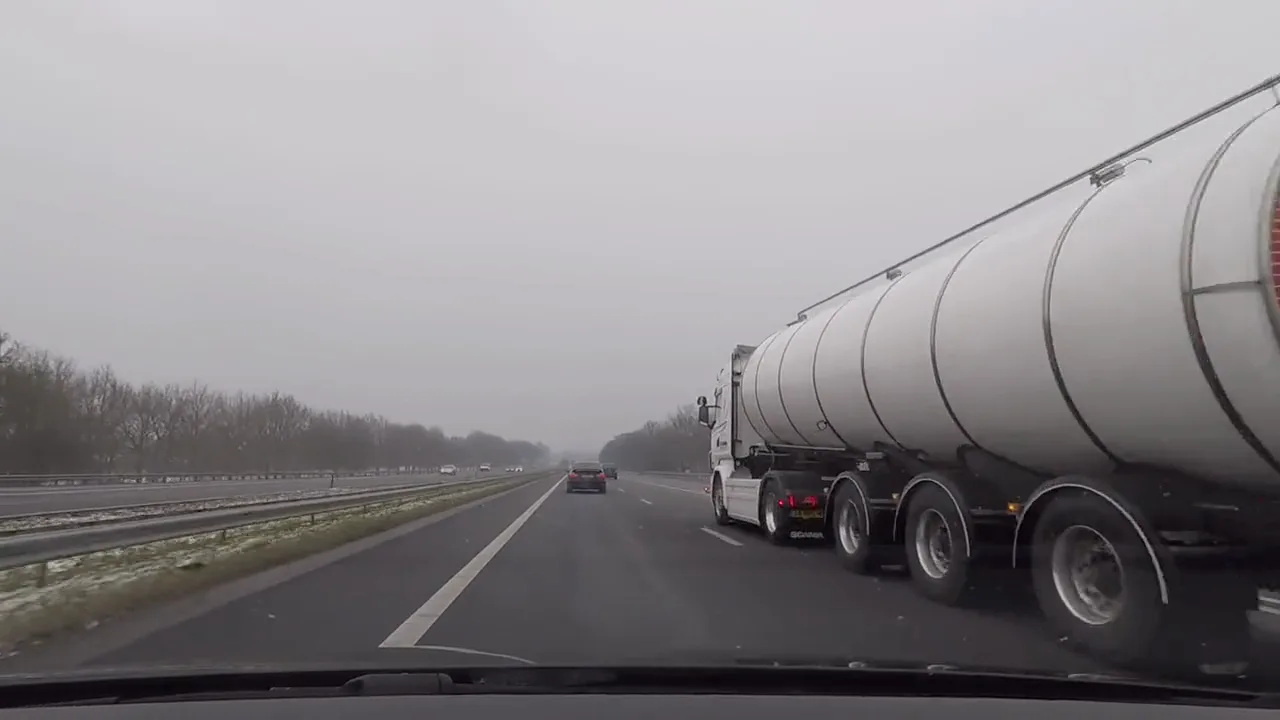
A pedestrian-detection feature ships over the air in two weeks and you hold the safety sign-off. Meet the night-road footage where the detection boxes flicker and drop, see the empty five-tab validation dossier you will build, accept the pass bar and the public-data norm, and bank a gut call: ship or hold, and the one condition you fear most. That prediction comes back at the end.

2

What does the car actually see?

Learn the camera, lidar, and radar suite (each strong somewhere, blind somewhere) and pin down what catching something even means. In a Python cell you compute Intersection-over-Union on a worked pair and call it a hit, miss, or phantom, locking the IoU 0.5 threshold and the false-negative definition that the rest of the dossier is scored against. Produces Section 1 of your dossier.

3

Score the detector

Precision, recall, and the VRU false-negative rate, then run them yourself. In a Python lab over the real derived open-AV detections-vs-ground-truth table you get the confusion counts and read off your own precision, recall, and false-negative rate on pedestrians and cyclists. The aggregate recall looks reassuringly green, then the act bridges out on the warning that an average can hide a body. Produces Section 2.

4

Hunt the misses, build the case, make the call

Slice recall by condition and watch VRU recall collapse at night and under occlusion, then triage the failure modes so the rare-but-catastrophic miss does not sit in the green band. Write the ISO 21448 SOTIF safety case for each top mode (trigger, functional insufficiency, hazardous behaviour, concrete mitigation), then sign your GO / GO-WITH-CONDITIONS / NO-GO verdict citing your own numbers, with a live consistency check that challenges a self-contradictory call. Produces Sections 3, 4, and 5 and completes the dossier.

5

Read it against a real crash, then submit

The camera pulls from your finished dossier to the real Uber Tempe 2018 fatal crash (NTSB), where the perception system flip-flopped the pedestrian's class and suppressed the brake at night, with your slide-one prediction surfaced beside the evidence. Write an evidence-based analysis of which of your own failure-mode rows the real system blew, anchored to a real public figure, teach back why recall on VRUs is the safety metric, then sign and submit the dossier.

What you'll learn

1

Score a detector the way safety actually depends on it

You lock the operating definition of a detection (a predicted box matched to a ground-truth box at IoU 0.5, an unmatched real object is a false negative), then compute precision, recall, and the false-negative rate on vulnerable road users from a real open-AV detections-vs-ground-truth table in Python. You leave knowing why recall on pedestrians and cyclists, not a headline accuracy number, is the figure that decides whether a person is safe near the car.

2

Find the dangerous slice an average hides

You break recall down by condition (day vs night, clear vs occluded, common vs rare class) and watch VRU recall collapse in the hard frames, then triage five to seven failure modes by likelihood times impact so the night-time pedestrian and the occluded child surface to the top band instead of being buried by a reassuring aggregate.

3

Write a SOTIF safety case and sign an accountable verdict

You turn each top failure mode into an ISO 21448 chain (triggering condition, functional insufficiency, hazardous behaviour, concrete mitigation or operating-domain restriction), then sign a GO / GO-WITH-CONDITIONS / NO-GO call that cites your own numbers and passes a consistency check. You read your finished dossier against the real Uber Tempe 2018 NTSB case and name which of your own rows the real system blew.

Best experienced on a laptop or desktop

Immersive Experience

Enroll to unlock this guided, interactive project workspace. Once enrolled, launch it anytime from your dashboard. Your completion is automatically logged for evaluation.

Best experienced on a laptop or desktop

Tags

adasautonomous-drivingcomputer-visionobject-detectionperception-validationfunctional-safety-sotifiso-21448precision-recallpythonpyodide
ℹ️

This experience is independently built by industry experts using real-world scenarios and public information. It is designed strictly for educational and portfolio-building purposes, and does not imply an official partnership or endorsement by the referenced companies.

Who is it for?

Applying to German or European universities? Jobs in Europe? Build proof with real projects.

Starting out?

No experience yet.

Do a graded project on a real-world brief. Walk away with a score that proves your skills, before the first job.

Job hunting?

Stand out on applications.

Show a scorecard with real criteria. Says more than any CV bullet.

Career switch?

Pivot into a new field.

Prove you can handle a real challenge in that domain, graded against the same bar as everyone else.

Portfolio?

Grade your portfolio.

Proov projects come with a score, a pass/fail, and a public verification link.

PROOV · VERIFIED PROOF OF SKILLS