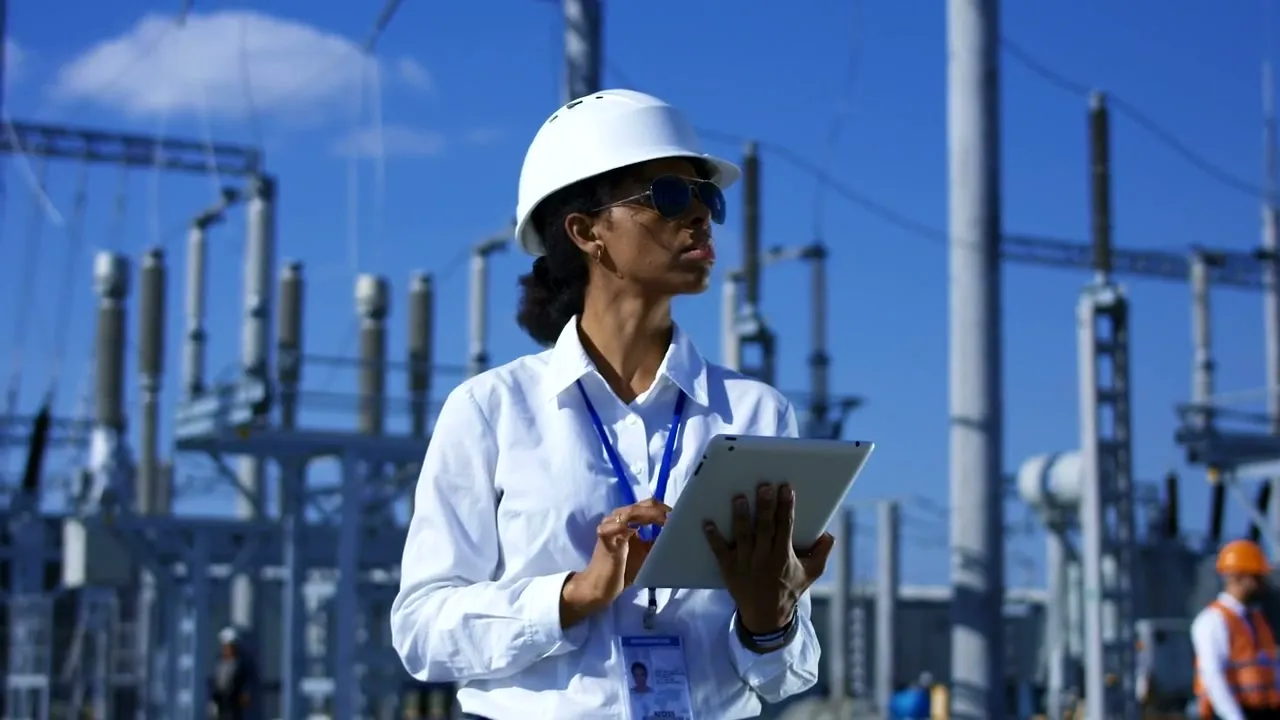
Talk about Germany's energy transition and the images that come to mind are physical: wind turbines along the North Sea coast, solar panels on warehouse roofs, transmission lines planned through farmland nobody wants running through it. All of that is real. Underneath nearly all of it, though, is a problem that looks a lot more like a spreadsheet than a construction site: forecasting, balancing and predicting, at a scale no person can do by hand.
The data problem inside the infrastructure
Three examples make the pattern clear.
- Forecasting yield. How much power will a wind farm or solar array actually produce tomorrow, next week, next quarter. Weather is uncertain, equipment degrades, and the answer feeds directly into how much energy has to be bought or sold elsewhere to cover the gap.
- Balancing the grid. Electricity supply and demand have to match in near real time, and renewable generation is far less predictable than a gas or coal plant running on a fixed schedule. Someone, or increasingly some model, has to work out where a shortfall or surplus is heading before it happens.
- Predicting maintenance. A turbine that fails unexpectedly costs far more than one serviced ahead of time. Sensor data from the equipment, read correctly, can flag a developing fault before it becomes a shutdown.
None of these are solved once and left alone. They run continuously, which is exactly why they need people, not a one-off model somebody built years ago and forgot about.
Who is actually hiring for this
The employers behind these roles are less visible than a well-known car manufacturer, but the sector is wide: utilities that generate and sell power, grid operators responsible for keeping supply and demand balanced across a region, renewables operators running wind and solar assets directly, energy trading desks that buy and sell power ahead of when it is actually generated, and consultancies advising all of the above on the transition itself.
A junior data role inside any of these rarely means designing a new forecasting method from scratch. More often it means maintaining and improving a pipeline that already exists, checking a model's predictions against what actually happened and flagging when it drifts, and turning a forecast into something a trading or operations team can act on without needing to understand the model itself. That last part, translating a technical output into a decision someone else can use, shows up constantly across this sector and is worth practising deliberately.
The turbine yield project is a direct example of the forecasting problem above: given sensor readings from a turbine, predict how much energy it will actually produce, and document your model the way an engineering team would need it documented before trusting it. It is worth being clear that this is a case study built on public data, not a project affiliated with or endorsed by Siemens Energy. What it gives you is real practice at the specific kind of forecasting question this sector runs on constantly.
Skills that transfer from any quantitative background
You do not need an energy engineering degree to start here. The core skills, time series analysis, working with sensor or weather data, statistics, and increasingly machine learning applied to forecasting, are the same skills used across physics, mathematics, engineering, environmental science and general data science degrees. What tends to be missing is not the technical foundation but exposure to what the data actually looks like in this sector: noisy, sensor-driven, tied to physical equipment that behaves differently as it ages.
That gap closes with one well-chosen project, which is a better use of your time this term than trying to acquire a second degree's worth of domain knowledge before you apply anywhere.
It also helps to know what does not transfer automatically: familiarity with the specific regulatory and market structure of the German and EU energy system, how balancing markets work, or what a grid operator is actually responsible for versus a generation company. You will not need to master any of that before your first project, but naming it as something you are aware of and building toward, rather than pretending you already know it, tends to land better in an interview than overstating your sector knowledge on a CV built mostly around general data skills.
Where this fits next to other data careers
If you are still deciding whether energy is the right sector for you specifically, or weighing it against other data career paths in Germany, data science jobs in Germany is a useful next read. It covers the wider landscape this sector sits inside, so you can judge the fit before committing a project's worth of time to it.
Either way, the fastest way to find out whether this kind of forecasting work suits you is to do a real version of it, not read another article about it. Pick the turbine project, finish it, and see whether the problem holds your attention past the first hour.