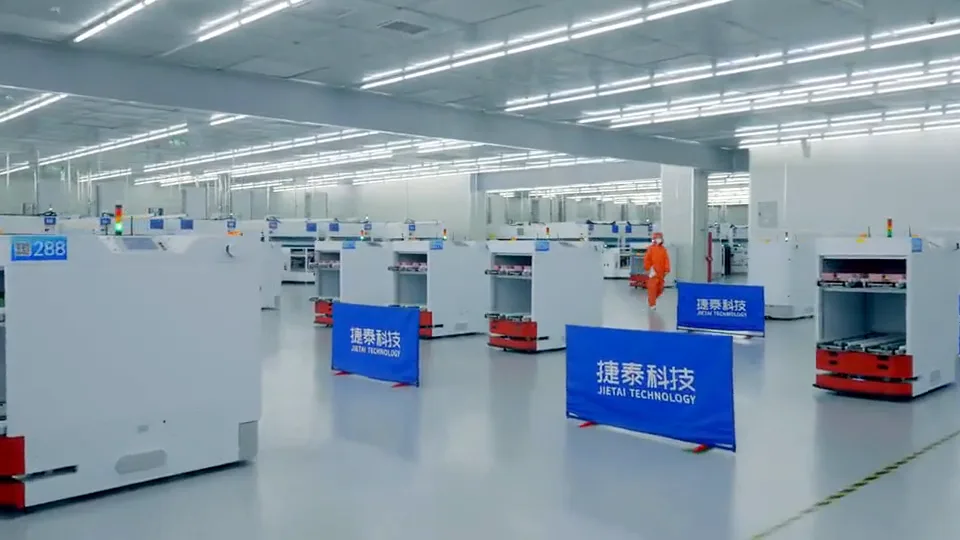
Picture a warehouse floor with three hundred mobile robots on it. Each one is simple: it picks up a shelf, drives it to a human packer, drives back, repeats. The robot itself is not the hard engineering problem here. What happens when three hundred of them share the same floor, at the same time, all racing toward the same shift deadline, is the actual problem, and it is a software problem, not a mechanical one.
That gap between "the robot" and "the fleet" is where most of the real careers in warehouse robotics sit, and it is worth understanding properly.
What a single robot actually has to solve
A warehouse robot's own job is genuinely simple: get from A to B, lift or carry something, get to C. Sensors, motors and a local path around obstacles handle that part, and it has been solved well enough for years that it is no longer the interesting question.
The interesting question starts the moment you have more than one robot in the same space, because now every robot's plan can conflict with every other robot's plan, and someone has to resolve that before it turns into gridlock.
The four problems that actually define fleet coordination
Task allocation. At any moment there might be four thousand items to pick and three hundred robots free to pick them. Deciding which robot goes after which item, in which order, is an optimisation problem: you want the shortest total travel distance, the fewest idle robots, and the orders that are closest to their shipping deadline handled first. Get the allocation wrong and you can have robots standing idle in one aisle while a queue builds in another.
Congestion. Robots share aisles, intersections and charging docks. Left alone, they behave like cars with no traffic lights: everyone tries to use the same junction at once. A coordination system has to manage that traffic, sometimes by rerouting a robot the long way round, sometimes by holding one back for a few seconds so a busier path clears first.
Priority. Not every task is equal. An order with fifteen minutes left before its shipping cutoff needs to jump the queue ahead of one with three hours to spare. Priority logic decides which robot gets rerouted, which waits, and which gets first claim on a contested aisle, all while the underlying picture keeps changing as new orders arrive.
Failure recovery. A robot's battery runs low, a shelf gets jammed, a robot stops responding. None of that is rare at fleet scale, and the system has to notice quickly, reassign that robot's in-progress task to someone else, and route around the now-blocked spot, without the rest of the fleet grinding to a halt while it works that out.
Why this is a software career, not a mechanical one
Most students hear "warehouse robotics" and picture mechanical engineering: motors, grippers, chassis design. That work exists, but it is a small and mostly settled slice of the field. The growth, and the actual hiring demand, sits in the coordination layer: the algorithms that do task allocation, the systems that model and predict congestion, the logic that reprioritises live, and the recovery code that keeps a fleet moving when parts of it fail.
That means the skills that matter here are algorithms, systems thinking and data, not CAD. If you can reason about scheduling, queuing and optimisation under constraints, you already have the core of what this work asks for. The robotics knowledge you pick up on top of that is the smaller half, and it puts fleet coordination alongside the other software-heavy roles covered in Germany's job market outlook for 2026.
Where this sits for a career based in Germany
Germany's economy runs a lot of physical goods through a dense logistics network, and the pressure to automate warehouse and distribution operations is real and growing, driven by labour availability and delivery-speed competition as much as by cost. That makes fleet coordination a genuinely relevant skill line for engineers based here, alongside the wider push into industrial software covered in in-demand jobs in Germany for 2026.
The honest way to find out whether this kind of problem interests you is to actually try coordinating a fleet under a deadline, not to read about it.
Do that, and you will know within the first hour whether the problem of "who goes where, in what order, and what happens when something breaks" is the kind of puzzle you want to spend a career on. If it is, you now have a graded, verifiable project that shows it, not just an interest you mentioned in an interview.